
 United Kingdom · Autumn 1872
Part of: Around the world in eighty days · 14 of 28
14 · East China Sea · 7 – 11 Nov
Four days on a pilot boat


Trip details
- When
- 2 Oct – 21 Dec 1872
- How long
- 81 days
- Who went
- Me, Passepartout, and from Pillaji, Aouda
- Stops
- 28
- Getting around
- 40,000 km by steamer, rail, elephant and sledge
In this story · 3 chapters
Pilot boats in Hong Kong anchor off the quay in a loose row, small and well kept, with their crews asleep under awnings in the heat of the day. I walked the length of the row on the morning of Thursday 7 November with Mrs Aouda beside me and Mr Fix a few steps behind, looking, I thought, oddly pleased with my misfortune. I put this down to a sympathetic nature that had not found the right expression. I was mistaken about him for some weeks yet.
At the end of the row a man in a tarpaulin hat was watching me from the stern of a schooner-rigged boat with a clean white hull. He was about forty-five, broad, burned the colour of a saddle, with very steady eyes. He asked whether I wanted a boat. I said I did. His name was John Bunsby and his boat was the Tankadère, number forty-three, about twenty tons.
01 The bargain
I asked whether he would take me to Yokohama. He looked at me as if I had asked him to row to the moon. Sixteen hundred miles in a boat that size, at the end of the season, was not a thing he would do for any price, and he named some prices to show me how firmly he meant it. I respected that. I asked how far it was to Shanghai.
Eight hundred miles, he said.
The American mail steamer for San Francisco, I had learned that morning, does not start from Hong Kong at all. She starts from Shanghai, and calls at Yokohama on her way across the Pacific. She was due to leave Shanghai at seven in the evening on Thursday 14 November. If I could be in Shanghai by then I lost nothing. If I could reach her I would also pass through Yokohama, where, I had some hope, I might find Passepartout.
Bunsby walked to the bow and back, twice, chewing on the question. Then he named terms. I accepted them before he had finished, which seemed to disappoint him slightly, as though he had been looking forward to the haggling.
| Item | Terms |
|---|---|
| Vessel | Pilot boat Tankadère, No. 43, about 20 tons, schooner rig |
| Master and crew | John Bunsby and four men |
| Destination | Shanghai, about 800 miles |
| Hire | £100 a day, paid in advance in part |
| Bonus | £200 if we reach Shanghai before the American steamer sails |
| Passengers | Myself, Mrs Aouda, Mr Fix |
| Provisions | Supplied by the master; tea, rice, salt beef, ship's biscuit |
| Sailing | 3 pm, Thursday 7 November |
Mr Fix asked to come. He said he was going the same way and would pay his share. I told him he would be my guest. He went rather red and thanked me. I took this, too, for a sympathetic nature.
Mrs Aouda I offered to leave in Hong Kong with sufficient means to wait for a steamer in comfort. She declined, very simply, in five words, and stepped aboard before I had found a reply. That settled it.
02 The typhoon
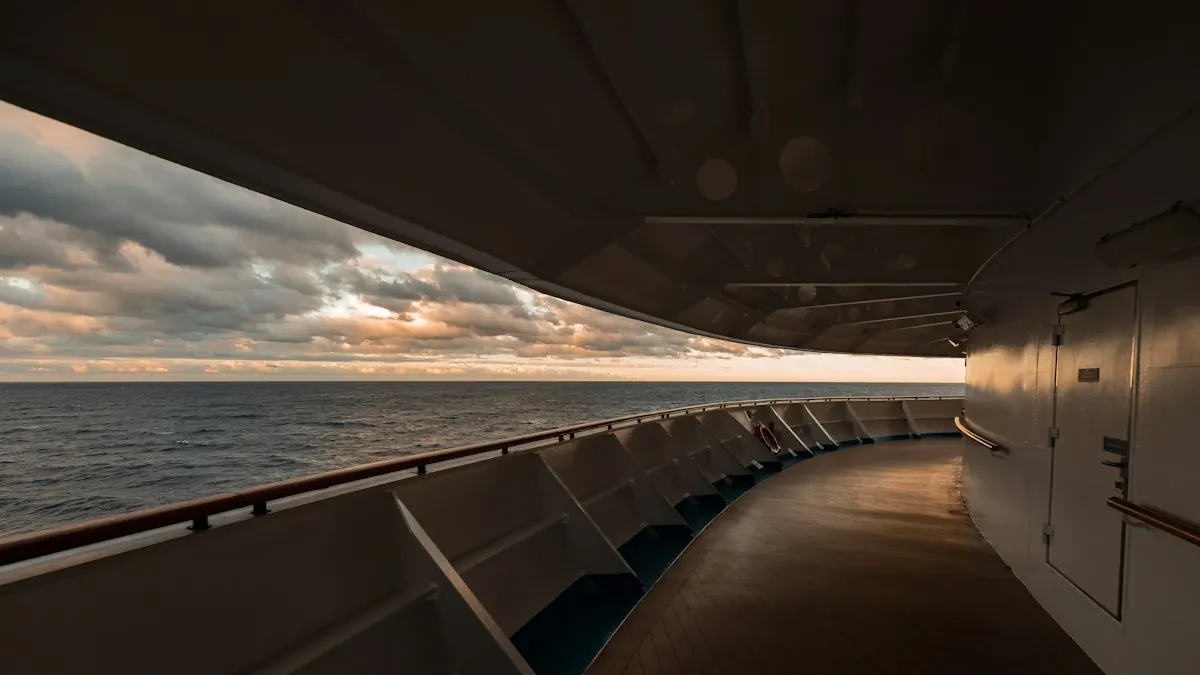
We left at ten minutes past three. The Tankadère was a beautiful boat to sail in a fair wind. She leaned over and simply went, with a hiss along her side, and for the first day and a half she made nine and ten knots on a northerly course up the coast. Bunsby kept well in sight of the shore so as to have the current with him. He spoke little and steered a great deal. I liked him.
On the evening of the second day the barometer began to fall. Bunsby tapped it, looked at the sky to the south-east, which had turned a dirty copper colour, and came to tell me, with the courtesy of a man reporting bad news to an employer, that we were going to have a typhoon. He proposed to run before it, under almost no sail, rather than make for a harbour. A harbour, he said, would be safer for the boat and fatal to my appointment. He wanted me to choose.
I said we would run before it.
It came at about nine. I have been in heavy weather on large ships and had always thought I understood it. A twenty-ton boat in a typhoon is another matter. The wind was not a wind so much as a solid thing leaning on us. The sea came up in hills, and the Tankadère climbed each one, hung on the top of it for a moment in a white roar, and then slid down the far side so fast that I felt the deck drop away beneath my feet. Bunsby had a scrap of storm jib set and nothing else. Two of his men were lashed at the tiller with him. The rain was horizontal and tasted of salt.
Mrs Aouda refused to go below. I asked her to, once, and then did not ask again, because I saw that she had made up her mind and that the cabin, which was dark and leaking and full of the noise of things breaking loose, would be worse for her than the open air. She sat in the lee of the cabin top, holding a rail, wrapped in a seaman's coat that reached her ankles, and watched the sea. When a wave came aboard she shut her eyes and opened them again afterwards. She did not cry out once in the whole night. Towards two in the morning, when the boat came down off a particularly large sea and seemed to stop dead, she reached across and put a hand on my arm, briefly, and took it away again. I do not think it was for her own comfort.
I have known a number of brave men. I have not, I think, known anyone braver.
I have known a number of brave men. I have not, I think, known anyone braver.
The worst of it passed at dawn. The wind went round to the north-west and blew hard for another day, but it was only a gale, and after the night we had spent it felt almost domestic. We had been driven a long way off our course and lost a good deal of time, though less than I had feared. Bunsby calculated, and I checked his calculation, that if the wind held we should raise the mouth of the Yangtze on the morning of the 11th.
03 Signals off Shanghai
We did not reach Shanghai. We came within about three miles of the entrance to the river at a little before seven in the evening of Monday 11 November, when the wind died almost to nothing and the tide turned against us. Bunsby swore, quietly and at length. He had worked very hard for his bonus.
And at that moment we saw the steamer. She was coming out of the river with a long plume of black smoke behind her, and she was the American mail boat, the General Grant. She was leaving early, or at least earlier than the time I had been given, which meant either a change of schedule or an error in my information. I have not discovered which. It did not matter.
Bunsby had a small brass gun on the foredeck, used in fog. I asked him to fire it and to hoist his flag at half-mast. He did both. A flag at half-mast is a signal of distress, and I was in distress, of a specialised kind. The gun went off with a thump that echoed across the flat water, and then went off again. Mrs Aouda stood on the cabin top and waved a white shawl. Mr Fix, I noticed, did not wave anything.
For two or three minutes the steamer kept her course. Then she slowed, and swung a little towards us, and stopped. Her captain was a decent man. A boat came across. We went aboard her, Mrs Aouda first, myself last, with the carpet bag.
Before I left the Tankadère I paid Bunsby. He had not quite reached Shanghai, which by the letter of our agreement cost him his bonus. I paid him the bonus all the same, in addition to the hire, for the days he had spent and the night he had fought. He had kept his part of the bargain in every respect that lay within his power, and I do not see that a man should be fined for the tide. He was surprised. I was rather glad to have surprised him.
The General Grant sailed for Yokohama that evening. I had lost the Carnatic and gained the right steamer, which seemed to me, on reflection, a reasonable exchange. Balance: none in hand, none owing. Passepartout still missing.
Read nextPassepartout's account: the Long NosesWhere he was all this time, in his own words.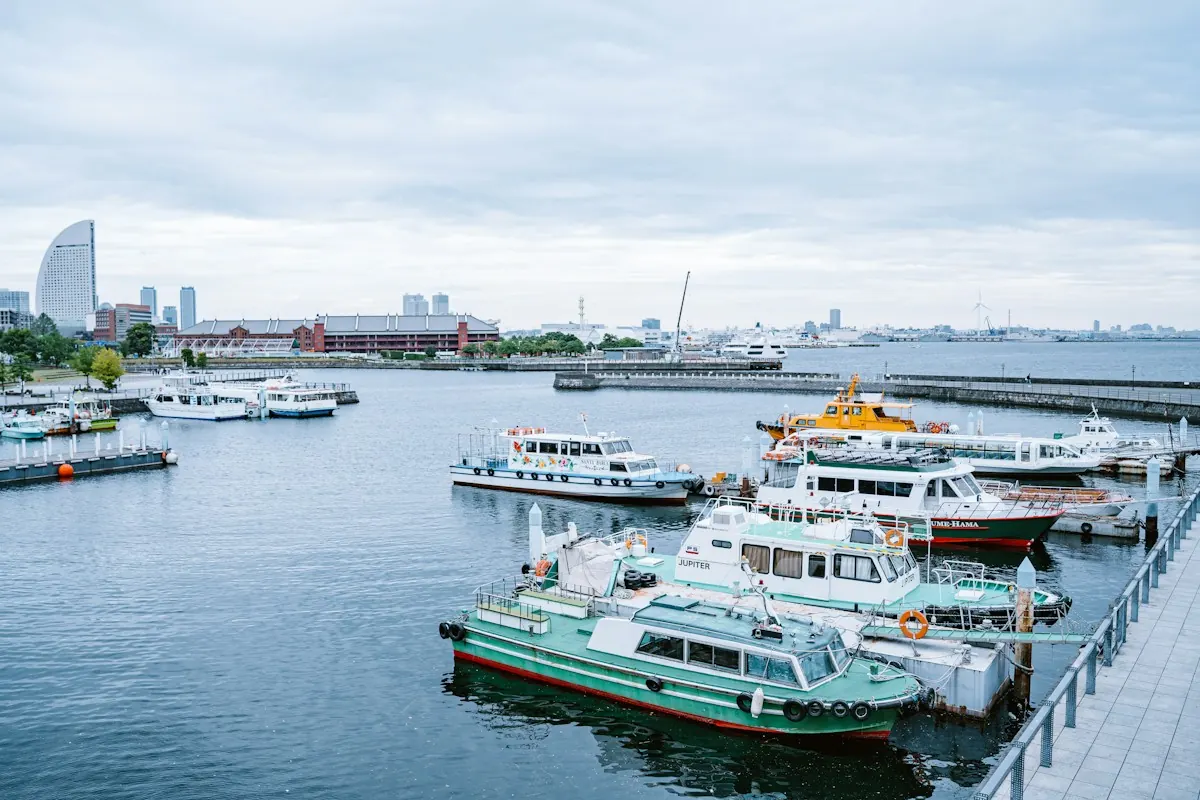
Aboard the Tankadère