
 United Kingdom · Autumn 1872
Part of: Around the world in eighty days · 16 of 28
16 · Yokohama · 14 Nov · day trip
Passepartout's account: the Long Noses

Trip details
- When
- 2 Oct – 21 Dec 1872
- How long
- 81 days
- Who went
- Me, Passepartout, and from Pillaji, Aouda
- Stops
- 28
- Getting around
- 40,000 km by steamer, rail, elephant and sledge
In this story · 4 chapters
I reached Yokohama on the morning of Wednesday 13 November and found my servant the same evening, by a route I could not have planned. He has asked to tell it himself. I have corrected nothing except the spelling, and not all of that. P.F.
01 The Carnatic, without monsieur
Ah, where to begin! With the headache, I think, because that is where it began for me. I woke up on the Carnatic on the morning of the 7th of November in a berth that was not mine, in a cabin that was not mine, with a head like a drum that somebody was still beating. I had no memory of coming aboard. I had a memory of Monsieur Fix, very friendly, a glass, another glass, a room full of smoke and men lying on low couches, and a pipe somebody put into my hand. After that, nothing. Nothing at all!
I got up. I went on deck. The sea was all round us, very blue, very large, and no land. And then, standing there with the wind in my face, I remembered what I had gone to the docks to do, and what I had found out, and what Monsieur Fix had kept me from doing. I had learned the Carnatic would sail that evening, early, and I had gone to tell my master, and I had not told him. Mon Dieu. I ran all over that ship. I looked in the saloon, in every cabin, on the deck, in the hold nearly. Monsieur Fogg was not aboard. Madame Aouda was not aboard. I had gone to Japan and left them in China.
I will not say what I called myself. My mother would not like it. I called Monsieur Fix a few things also, and those I would say again, but not here, because my master says this is a respectable account.
For six days I sat on that ship and was miserable in the most comfortable cabin I have ever had, because Monsieur Fogg had paid for it in advance, and I ate very well, because he had paid for that too. It made it worse. Every good dinner, I thought: he paid for this, and you lost him.
02 Yokohama, with nothing in my pockets
We came into Yokohama on the 13th. I went ashore with the clothes I stood in and not one single sou. The carpet bag with all the money was with my master. My own little purse was, I think, with somebody in the smoking-house in Hong Kong.
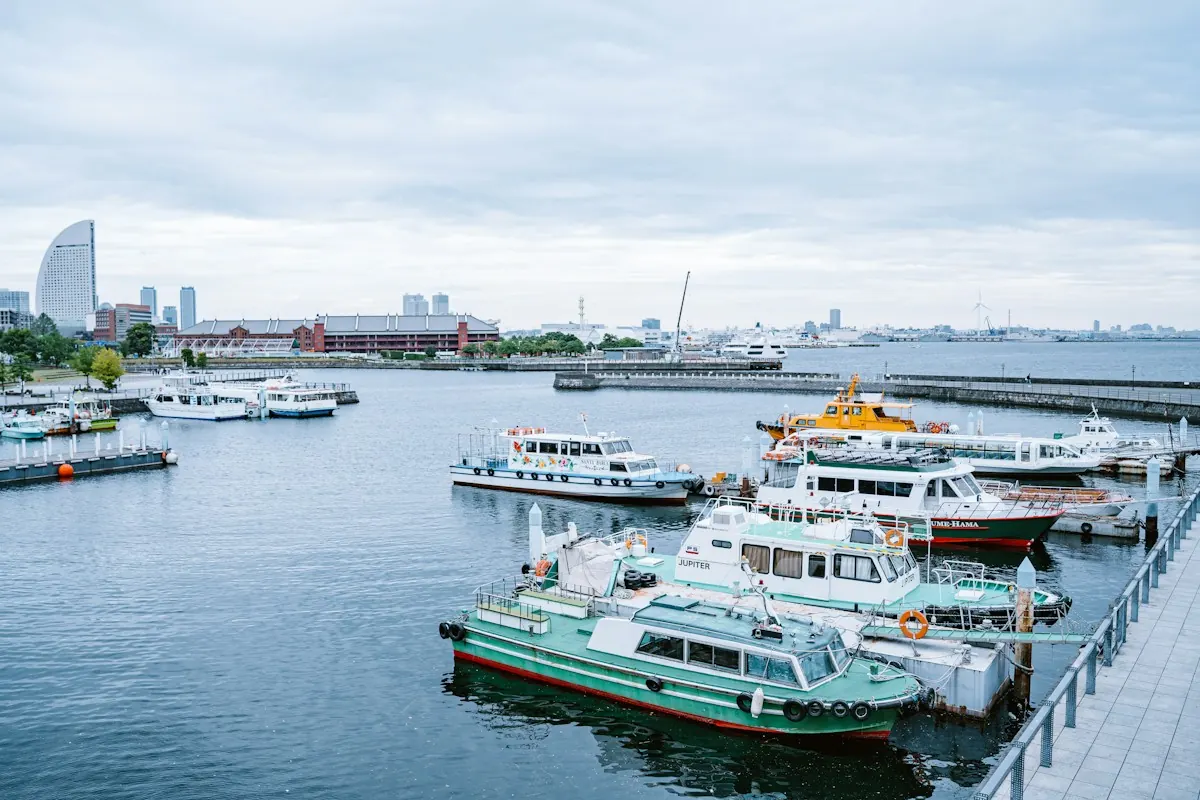
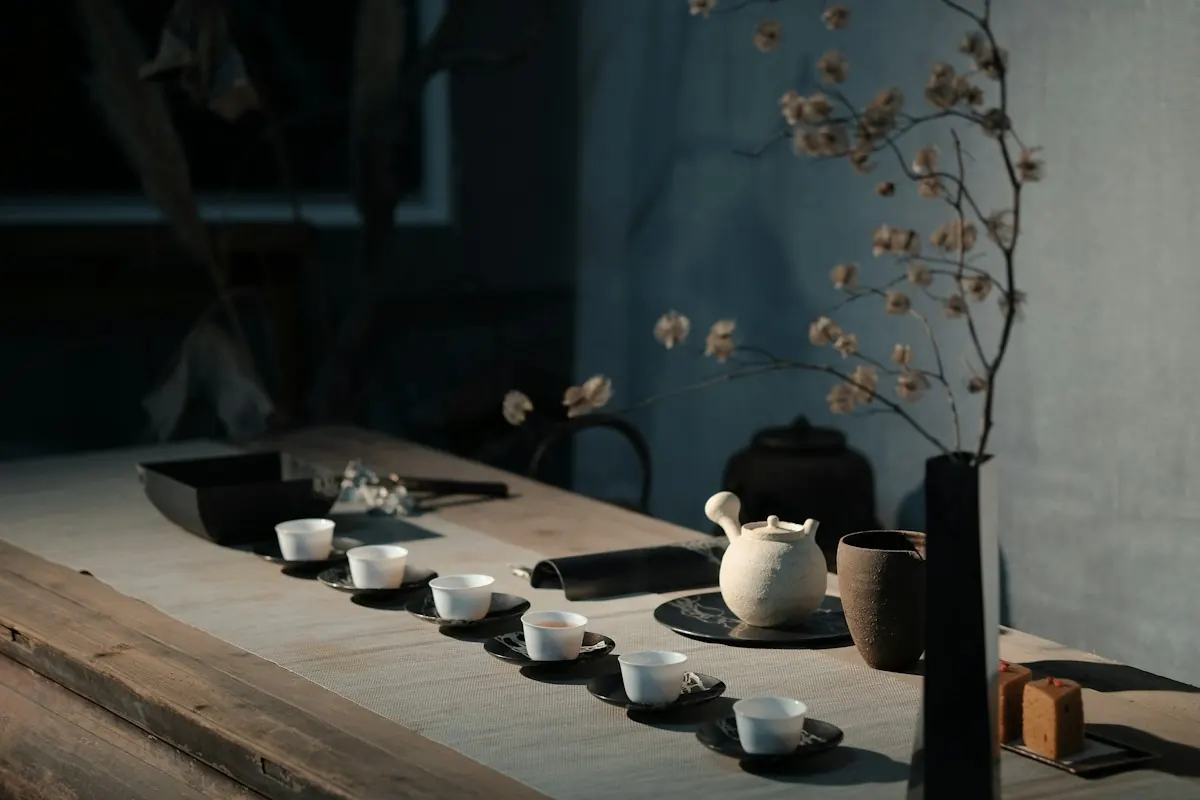
I walked. What else could I do? First through the European quarter, all consulates and offices and very correct, where nobody wanted a French servant without references and without a master. Then into the Japanese town, which was another world entirely. The streets were full of people in robes of every colour, lanterns, little shops open to the street, a smell of fish and charcoal and something sweet frying. There were tea houses with girls who brought you tiny cups on lacquer trays and bowed. I could not buy one cup. I was so hungry I could have eaten the tray.
By the evening of the first day I had decided something. I had a very good suit of clothes, my best, which I had bought in London for travelling with a gentleman. In Japan, I said to myself, a European suit is a European suit, it is rare, somebody will want it. I found a dealer in old clothes. He wanted it! He gave me for it an old Japanese robe, a sort of faded blue thing with wide sleeves, a strip of cloth to tie round my head, and a few coins besides. I put on the robe right there in his shop. I looked, I am sure, completely ridiculous. But I ate that night, a big bowl of rice and some fish, and I have never had a better meal at the Reform Club. No, I am wrong. I have never been inside the Reform Club. But you understand.
03 The Honourable William Batulcar
The next morning I saw a man walking through the streets with a great painted board on two poles. Two clowns walked with him, banging drums. The board said, in English, that the Honourable William Batulcar's troupe of Japanese acrobats would give their last performances before leaving for the United States of America, and that the star of the show was the Long Noses, under the protection of the god Tingou.
The United States of America! That is where the mail steamer goes. I went straight to the circus.
Monsieur Batulcar was an American, a big man with a big voice and a waistcoat with eagles on it. He looked at me in my blue robe. He asked was I a servant. I said I was. He asked what use is a servant to a circus. I said I was strong, I could sing, I had been a gymnast and an acrobat in Paris before I was ever a valet, I had been a fireman too and could climb anything. He made me lift a bench with a man sitting on it. I lifted it. He made me sing. I sang a little song from my village and he laughed very much. He hired me. No wages to speak of, but my passage to America and my food. I nearly kissed him. I did not kiss him. He was not that kind of man.
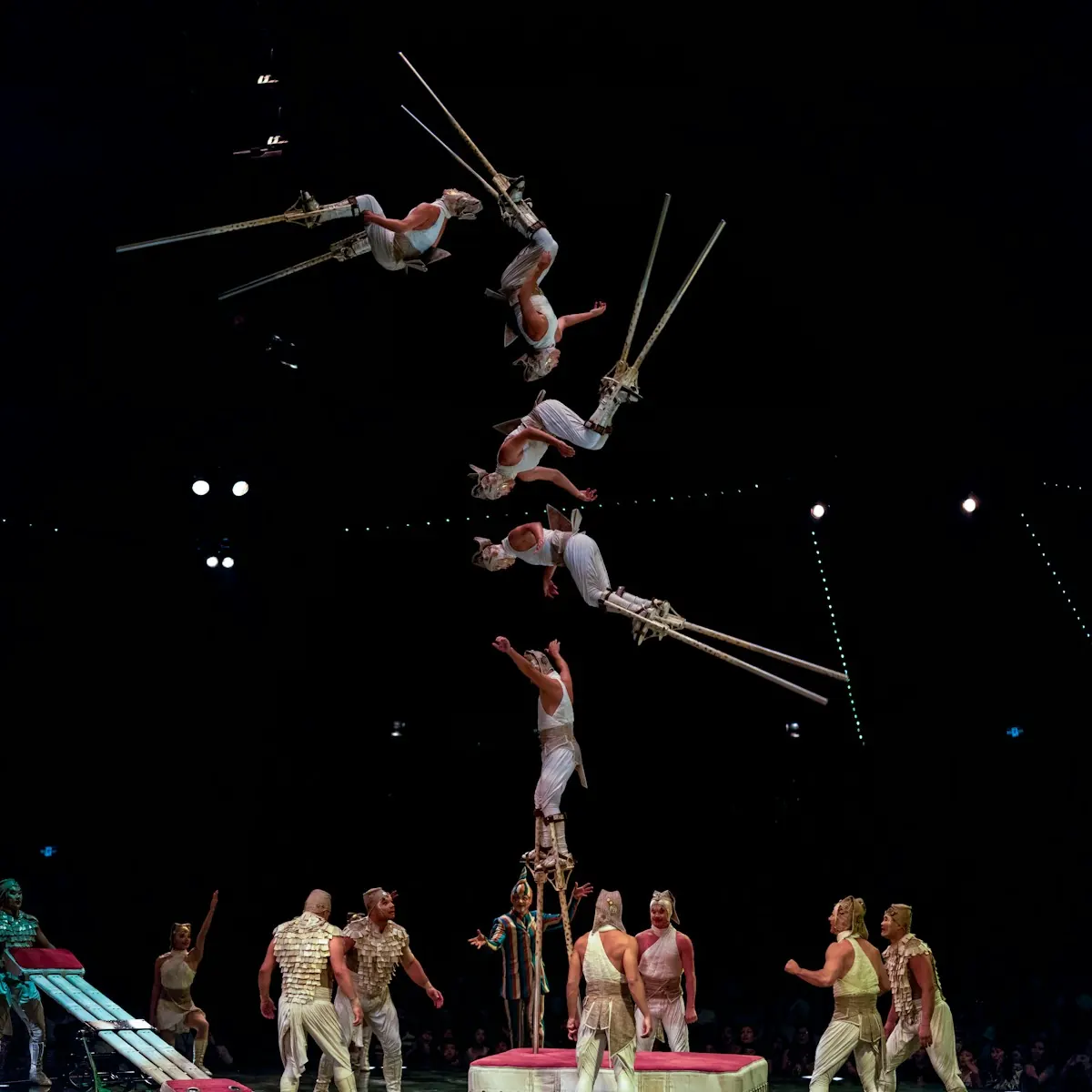
The Long Noses, I found out that afternoon, are a company of acrobats who wear false noses. But such noses! Five or six feet long, some of them, made of bamboo and painted, some straight, some curved like a sabre, some with warts on. They fix them to the face with straps. And then, in the great act at the end, they lie on their backs and stand their noses straight up in the air, and other acrobats climb onto the noses, and more onto those, until there is a pyramid of men balanced on noses forty feet high, up to the roof.
I was given a nose. A modest one, I am sorry to say, only six feet. And because I was strong and new and nobody knew if I could balance, they put me at the bottom of the pyramid, on my back, holding up the whole thing on my nose and my shoulders. Fine. A good position. Nobody falls on the man at the bottom except everybody.
04 The pyramid
So. The evening of the 13th. The theatre is full, people sitting on mats, lanterns, music, gongs. The jugglers, the man with the spinning tops, the girls with the fans and the butterflies of paper. And then the Long Noses. Drums! We march out. We lie down. The noses go up. The others climb. I feel them coming up above me, one, two, five, ten, the whole weight of the troupe pressing down through bamboo onto my poor face. I am sweating. I am praying to the god Tingou and to a few French saints at the same time.
And I look out, past the lanterns, into the front of the audience, and there is a gentleman in a dark coat sitting perfectly still, with his hands on his knees, looking at the stage as he looks at a hand of cards, with a lady beside him in a grey travelling dress.
It was him. It was Monsieur Fogg. And Madame Aouda!
What would you have done? I did not think. I did not think at all. I jumped up. I forgot completely about the nose, the pyramid, Monsieur Batulcar, the god Tingou, everything. I shouted Ah! mon maître! mon maître! and leapt off the stage into the front row.
Behind me, I am told, the pyramid came down like a house of cards. Long Noses everywhere! Men rolling on the boards, noses broken, the drums still going because nobody told the drummer to stop, the audience shrieking with laughter, thinking it was part of the show. It was not part of the show.
And my master, who I have not seen for a week, who I left on the wrong side of the China Sea, looks at me with my nose still strapped to my face and my blue robe torn, and he says, very calmly, Ah, Passepartout. There you are. And then he says, Come.
Monsieur Batulcar came running after us, purple, shouting about damages. Monsieur Fogg turned round, listened to him, counted out some banknotes from the carpet bag without a word, and gave them to him. Batulcar stopped shouting at once. I have never seen anybody stop shouting so fast.
I took the nose off in the street. Madame Aouda laughed, and then she cried a little, and then she laughed again. I think it was the nose. Monsieur Fogg said nothing at all for the whole walk to the harbour. But when we were aboard the General Grant and I had a proper coat again, which he had bought me, he came and stood beside me at the rail and said that he was glad to have me back. Just that. From Monsieur Fogg, that is a speech.
I have told him all about Monsieur Fix. He listened, and nodded, and said, Thank you, Passepartout, and asked me not to do anything about it. For now, he said. I do not like it. But I have promised.
Read nextNineteen days of whistThe Pacific crossing that followed, in my master's style, which is to say with a table.