
 United Kingdom · Autumn 1872
Part of: Around the world in eighty days · 20 of 28
20 · Medicine Bow · 7 Dec · day trip
The bridge at Medicine Bow

Trip details
- When
- 2 Oct – 21 Dec 1872
- How long
- 81 days
- Who went
- Me, Passepartout, and from Pillaji, Aouda
- Stops
- 28
- Getting around
- 40,000 km by steamer, rail, elephant and sledge
In this story · 2 chapters
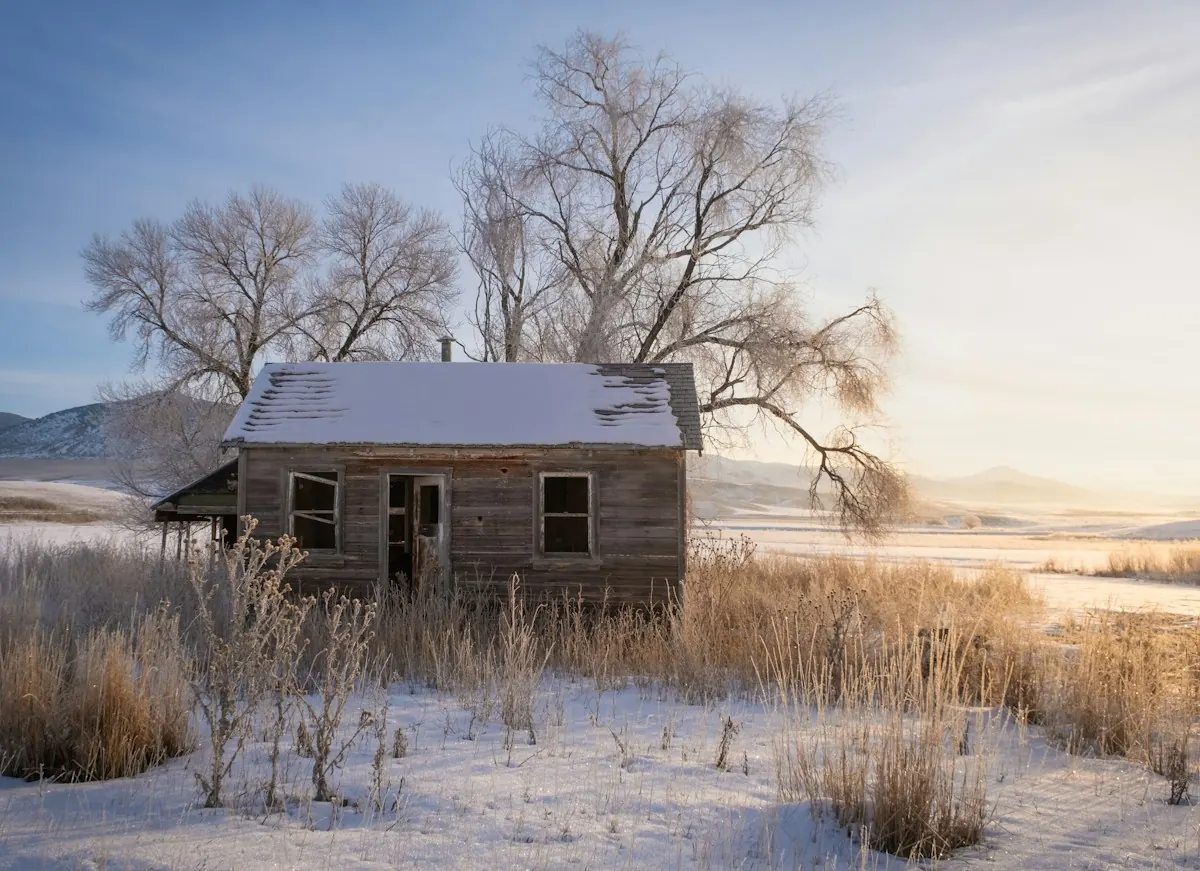
At a little after noon on Saturday 7 December the train came to a stop at Medicine Bow station, in the Wyoming Territory, in a wide brown valley with snow on the hills on either side and a cold wind coming down off them. We had been held there, it turned out, by a signal. A signalman came along the line and spoke to the driver and the conductor for some time, and then the conductor came back through the carriages and asked all the passengers to step down.
The trouble was the bridge. A mile or so beyond the station, the line crosses a river called the Medicine Bow, which runs through a deep rocky gorge, on a suspension bridge of iron and timber. The signalman had been out to look at it that morning and found several of the cables broken and the roadway sagging. In his opinion it would not bear the weight of a train. A telegram had been sent to Omaha for another train to come to the far side, but that would take at least six hours, and probably more.
There was a good deal of indignation on the platform. Colonel Proctor, of whom I have written elsewhere and who was, by one of those coincidences America seems to specialise in, on the same train, expressed his views on the railway company at the top of his voice. I took no part. I had my own engagement with the Colonel, and preferred not to anticipate it on a railway platform in the wind.
01 The vote
The driver, a man called Forster, then put forward an idea. He said that the bridge, though damaged, would very likely bear the train for the few seconds required to cross it if the train went over fast enough. He proposed to back up some distance, open the throttle, and take the bridge at the highest speed the engine could make, so that, as he put it, the train would be over before the bridge had time to notice.
I have since heard this explained on scientific grounds and I remain unconvinced by the explanation. But the passengers liked it very much. It promised to save six hours, and the alternative was to stand in the cold. They put it to a vote, by show of hands, standing on the platform. Almost every hand went up. Colonel Proctor's went up twice.
I did not vote. It was not my railway, and I had no expert opinion on bridges. I record only that I was in a hurry and that I did not think a vote of passengers was the best way to settle a question of engineering.
Passepartout had a suggestion. It was a very good one, and I set it down here in full because it was received by no one. He proposed that the passengers should first walk across the bridge on foot, which they could do quite safely along the rails, and that the train should then be run across empty, as fast as Forster liked. If the bridge held, everybody would be on the far side, the train would join them, and we could all get back aboard. If the bridge did not hold, we should have lost a train, which the company could afford, and no passengers, which it could not.
He made this suggestion to three different people and was told by each of them, in various forms, to mind his own business. One of them told him that the train was going across at sixty miles an hour and that there was no danger whatever. Passepartout asked, reasonably, why then had they taken a vote. Nobody answered him. He came back to me looking very French and said that these people were all mad. I said that they were in a hurry, which is a kind of madness I understand, and that he had better get aboard.
Passepartout's suggestion was a very good one, and was received by no one.
02 The crossing
We got aboard. Mrs Aouda sat by the window with her hands folded. Mr Fix sat opposite me and took out his watch. I took out mine.
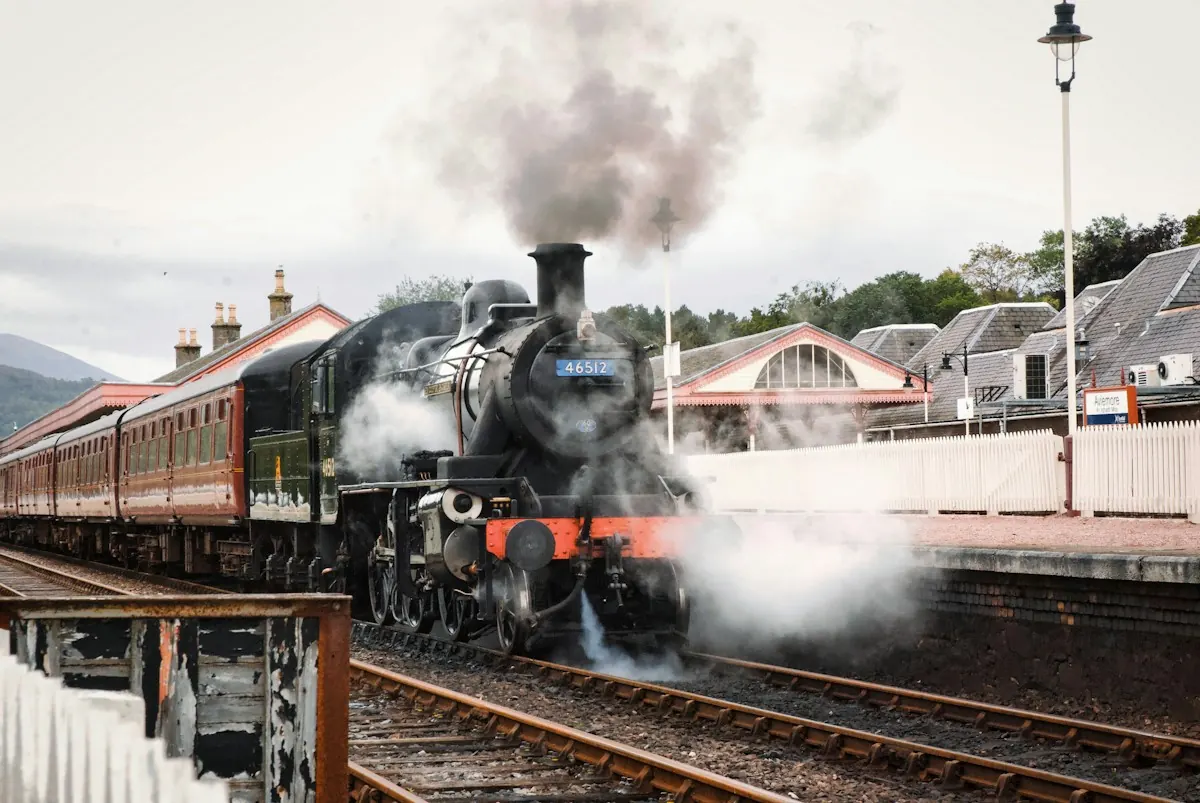
The train backed slowly for about a mile, to give itself a run. Then it stopped. Then, with a long shriek of the whistle, it started forward again, and kept on gaining. I have never been on a train going so fast, before or since. The carriages swayed and rattled; the telegraph poles went by like the teeth of a comb; the snow on the hills ran together into a white streak. Passepartout, beside me, said something in French that I believe was a prayer.
We reached the bridge at, Forster said afterwards, nearly a hundred miles an hour. I felt it under us only as a sudden change in the sound of the wheels, a hollow, drumming note, for perhaps two seconds. Then the note changed back. We were across.
And behind us, with a long, slow, grinding roar that we heard clearly above the train, the bridge went down into the river.
I looked back from the platform at the end of the carriage. Where the bridge had been there was a gap in the gorge, a tangle of cables and broken timber hanging from the far side, and the brown water underneath, foaming. It had held for exactly as long as it was asked to, and not a second longer.
The passengers cheered. Forster was a hero, and accepted the role. Passepartout said nothing at all. He sat down, looked at his hands, and then looked at me, and I saw in his face that he was thinking what I was thinking, which was that the vote had been right only by luck, and that his own idea would have been right by sense.
I told him so. He looked surprised, and then very pleased, and then he went to find some coffee. Six hours saved. Balance: none in hand, but none lost either.
We ran on east into the evening. The Colonel, meanwhile, had not forgotten San Francisco, and neither had I. We had settled on the next morning for our business, and a quiet carriage to do it in. Neither of us got our way.
Read nextFort KearneyThe next day, the duel that did not happen, and the morning Passepartout was taken from the train.
Medicine Bow, Wyoming Territory