
 United Kingdom · Autumn 1872
Eighty days, twenty thousand pounds, and not one minute to spare
On the second of October I wagered half my fortune that I could go round the world in eighty days. These are my notes, written up after the event and corrected to the minute.

- When
- 2 Oct – 21 Dec 1872
- How long
- 81 days
- Who went
- Me, Passepartout, and from Pillaji, Aouda
- Stops
- 28
- Getting around
- 40,000 km by steamer, rail, elephant and sledge
Trip details
- Who went
- Me, Passepartout, and from Pillaji, Aouda
- Getting around
- 40,000 km by steamer, rail, elephant and sledge
In this story · 3 chapters
I have been asked, by several people and on more than one occasion since December, how the business began. It began with a newspaper, a rubber of whist and a remark I need not have made. Since everything afterwards followed from that remark, I set the afternoon down here as exactly as I can, and in order.
01 An ordinary Wednesday
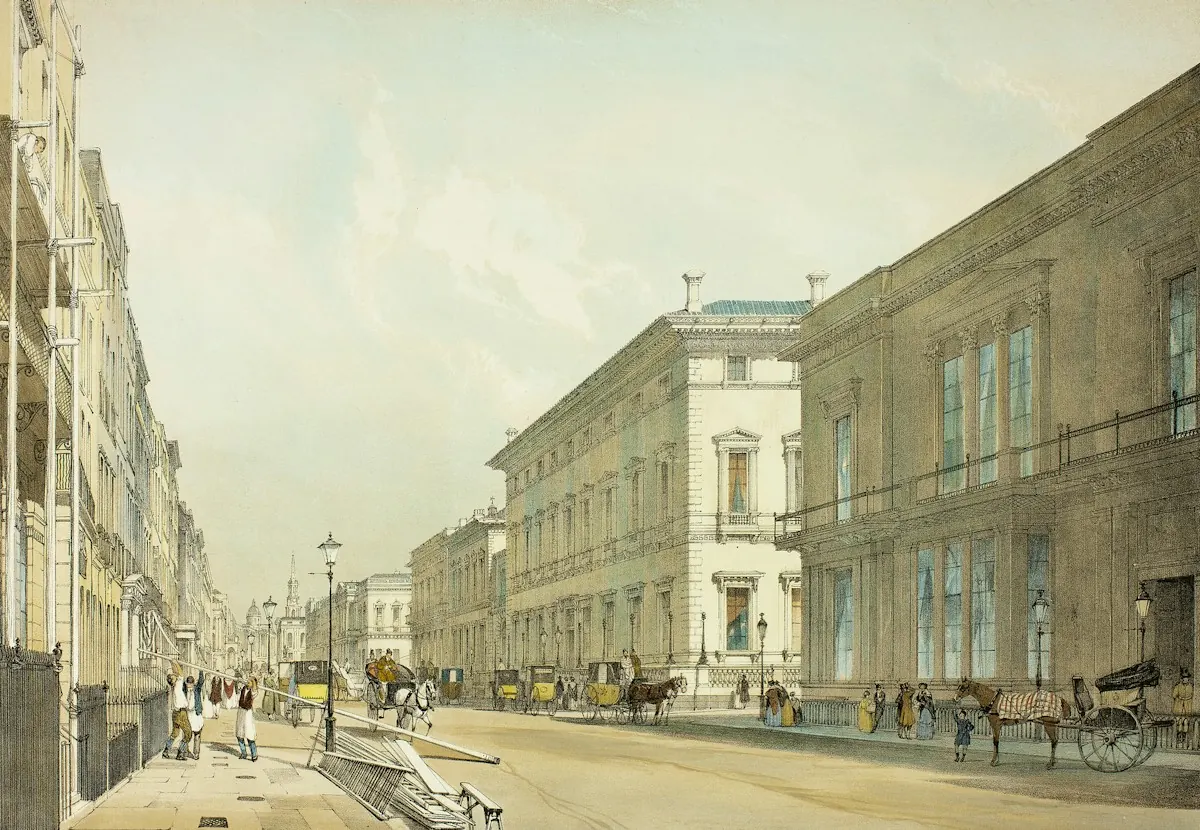
On Wednesday the 2nd of October 1872 I rose at eight, as I do, at No. 7 Savile Row. I was without a servant. The day before I had parted with James Forster, who had brought my shaving water at eighty-four degrees Fahrenheit instead of eighty-six. Two degrees is not a large error. But a man who will not trouble to measure two degrees will not trouble to measure anything, and I prefer a household in which I know where I stand.
His successor presented himself shortly after eleven: a Parisian of thirty or so named Jean Passepartout, broad in the shoulder, round in the face, with an honest look and a good deal of brown hair. He told me, at somewhat greater length than I required, that he had been a travelling singer, a rider in a circus, a gymnast on the high bar and a fireman in Paris before coming to London as a valet, and that what he wanted now above all was a quiet life with a regular master. I said he would find me regular. We compared watches. His was slow by a few minutes; he set it right without being asked, which I counted in his favour. I engaged him on the spot, gave him the written list of his duties and left for my club.
The walk from Savile Row to the Reform Club takes me a little under ten minutes. I have never found a reason to vary it. I lunched at my usual table, at the usual hour, on a dish of fish, a slice of roast beef and a stewed rhubarb, and afterwards read the Times and the Standard in the great saloon until a quarter to six. The Morning Chronicle I kept for last, as I generally do, because it is the least reliable and therefore the most diverting.
02 The argument
At twenty minutes to seven my usual partners came in for whist: Andrew Stuart, the engineer; John Sullivan and Samuel Fallentin, both bankers; Thomas Flanagan, the brewer; and Gauthier Ralph, who sits on the board of the Bank of England. The talk at the table had been the same all week. On the 29th of September a well-dressed gentleman had walked up to a cashier's counter at the Bank and walked away from it again with fifty-five thousand pounds in notes, and nobody had seen him since. Ralph was certain the man would be caught. The best detectives in London had been sent to every port of consequence, Liverpool, Glasgow, Le Havre, Suez, New York, and a handsome reward had been posted.
Stuart thought differently. The world, he said, was a large place, and a clever thief with a long start could lose himself in it for good. I said, without looking up from my cards, that it was not as large as it had been. He asked me what I meant. I answered by passing him the Chronicle, which had printed that morning a calculation of some interest. Now that the railway between Rothal and Allahabad was open across India, it said, a traveller who kept to the published connections could go right round the globe in eighty days. The stages were set out one by one. I had checked them over my rhubarb and found them sound.
Stuart allowed the arithmetic but not the conclusion. Eighty days on paper, he said, made no allowance for gales, head winds, fogs, shipwrecks, broken rails, missed connections, sick engineers, or any of the hundred mishaps that overtake a man the moment he leaves his own country. I said they were allowed for. He laughed and said he would lay four thousand pounds that the journey could not be made in that time. I said that I would lay rather more than that, that it could, and that I would make it myself.
There was a short silence. Flanagan put his cards face down. I set out my terms. I had twenty thousand pounds lying with Baring Brothers. I would wager the whole of it, against any of them who cared to take a share, that I would go round the world in eighty days or less: one thousand nine hundred and twenty hours, if they preferred it that way, or one hundred and fifteen thousand two hundred minutes. I would leave that same evening, by the 8:45 train for Dover.
Sullivan said I could not be serious. Fallentin said the expenses alone would ruin me. I replied that I would carry a further twenty thousand pounds for the expenses, and that if the journey consumed it, the journey would consume it. They know I do not joke about money. They know also that I do not, in the ordinary way, make remarks I am not prepared to stand behind; I suspect that is why the silence lasted as long as it did.
In the end the five of them took the whole of it between them, four thousand pounds apiece. We wrote out the terms on a sheet of club paper and each man signed. I am to present myself again in this saloon, the saloon of the Reform Club, by a quarter to nine on the evening of Saturday the 21st of December. If I am not there, the twenty thousand pounds standing in my name at Baring's becomes theirs.
Then we finished the rubber. I had been dealt a good hand, with diamonds trumps, and it seemed a pity to waste it. We made two tricks over.
| Stage | Means | Days | Due |
|---|---|---|---|
| London to Suez, by Mont Cenis and Brindisi | Rail and steamer | 7 | Wed 9 Oct |
| Suez to Bombay | Steamer | 13 | Tue 22 Oct |
| Bombay to Calcutta | Rail | 3 | Fri 25 Oct |
| Calcutta to Hong Kong | Steamer | 13 | Thu 7 Nov |
| Hong Kong to Yokohama | Steamer | 6 | Wed 13 Nov |
| Yokohama to San Francisco | Steamer | 22 | Thu 5 Dec |
| San Francisco to New York | Rail | 7 | Thu 12 Dec |
| New York to London | Steamer and rail | 9 | Sat 21 Dec |
| Total | 80 |
03 Ten minutes to pack
I left the club at twenty-five minutes past seven, having won twenty guineas at cards, and reached Savile Row at ten minutes to eight. Passepartout, who had been told I came home at midnight, was startled to see me. He was more startled when I told him we were leaving for Dover and Calais in ten minutes.
He asked whether I wished to take a trunk. I said no. A carpet bag would do: two woollen shirts and three pairs of stockings for each of us, my mackintosh and travelling rug, and good stout shoes, although I did not expect us to walk much. Anything else we would buy on the way. He asked how long we should be gone. I said about eighty days, and that we were going round the world.
I am told that he took this at first for a joke of mine. When it became clear that I do not make them, he sat down on the hall chair and said a number of things in French, of which I caught only the word for quiet. He had come to me, after all, for a settled life. I gave him a minute for it, which was all the minute could spare, and he got up and packed with a speed and neatness I have since learned to rely on.
Before we left I took a thick roll of Bank of England notes, twenty thousand pounds in all, from my desk, put it in the carpet bag and gave the bag to Passepartout, with instructions to take care of it. He held it for the rest of the evening as though it might go off. I took also my copy of Bradshaw's Continental guide, which contains every timetable I was likely to need as far as the Mediterranean, and my passport.
A cab took us down to Charing Cross. At the station a woman with a child in her arms and no shoes on her feet asked me for a penny. I gave her the twenty guineas I had won at whist; they were won without effort and seemed to belong to nobody in particular. Passepartout looked at me oddly when I did it. I believe it was the first moment he suspected that he might come to like his new situation after all.
My five partners had come down to the platform to see me off. I showed them my passport and told them I proposed to have it stamped by the consul or the police at every port, so that they might check my route on my return. Ralph said, very handsomely, that there was no need for that between gentlemen. I said I would do it anyway. Stuart shook my hand and said he looked forward to seeing me in eighty days, or rather to not seeing me. Flanagan said nothing; I think he had begun to calculate.
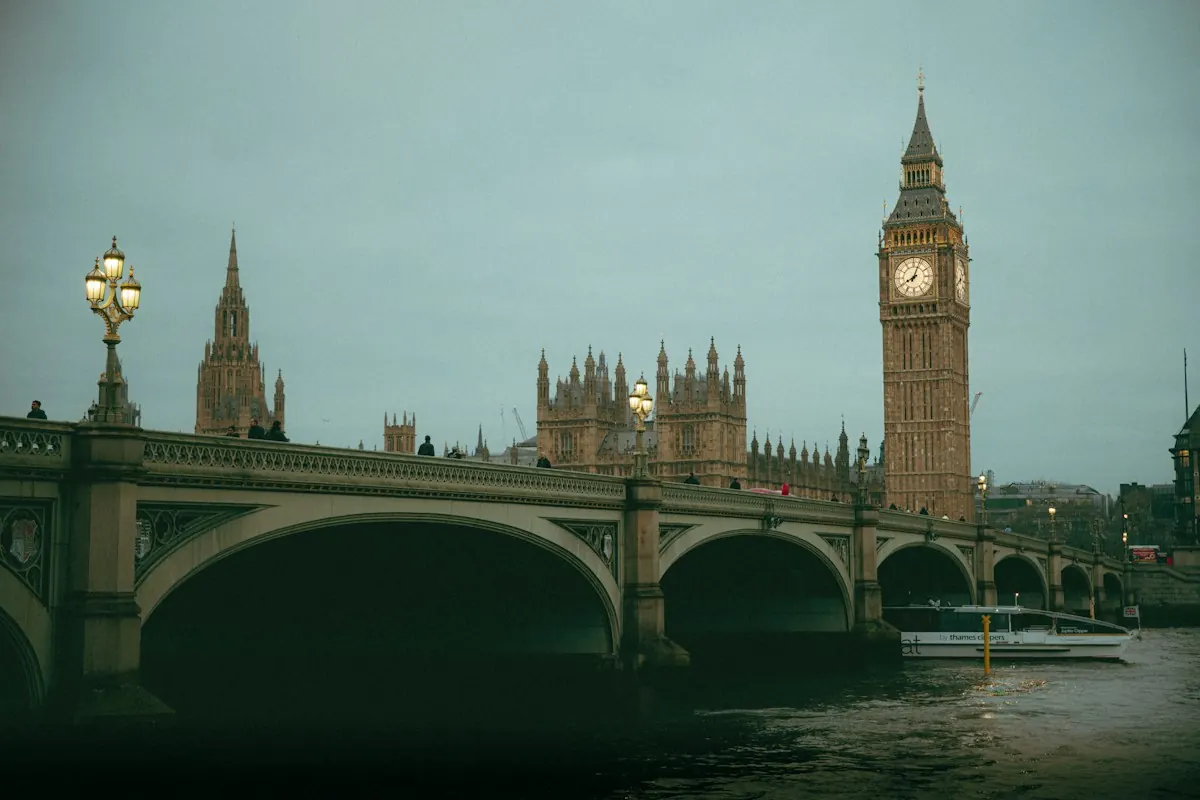
The train left at a quarter to nine, to the second. It was a dark night and a fine rain was falling. Passepartout sat opposite me with the bag on his knees and both arms round it, and watched the lamps of the suburbs go by as though each one were a friend he would not see again. I settled back, opened Bradshaw and turned to the page for Calais.
Balance: eighty days in hand. None spent.
Reform Club, Pall Mall, London