
 United Kingdom · Autumn 1872
Part of: Around the world in eighty days · 10 of 28
10 · Calcutta · 25 Oct · day trip
Two thousand pounds in Calcutta


Trip details
- When
- 2 Oct – 21 Dec 1872
- How long
- 81 days
- Who went
- Me, Passepartout, and from Pillaji, Aouda
- Stops
- 28
- Getting around
- 40,000 km by steamer, rail, elephant and sledge
Of all the sums I spent on the journey, the two thousand pounds I left in a Calcutta courtroom is the one I resent least, for it bought exactly what I needed and was over in under an hour. But I must begin at Allahabad, with a different two thousand pounds, and a different parting.
01 Allahabad
We reached the railway at Allahabad on the morning of Thursday the 24th of October, with Mrs Aouda awake and with us. The train for Calcutta left at noon. I sent Passepartout into the town to buy her what she would need for the journey: a dress, a shawl, a travelling cloak, a few things more. He went off with a sum that made him whistle and came back with everything, well chosen, and with change, which I noted.
It remained to settle with the guide. I paid him the fee we had agreed, which he accepted. Then I asked him whether he would be good enough to accept Kiouni as well.
He did not understand me at first and I had to say it again. He had risked a great deal for strangers, and asked nothing for it, and I could think of no sum in the carpet bag that answered to that. Kiouni was the only thing I owned in India that I thought worth giving him. The guide's eyes filled, and he could not speak for some time. Passepartout, beside him, did not pretend he could speak either. He gave Kiouni the last of his sugar and put his arms as far round the elephant's trunk as they would go, and Kiouni lifted him gently off the ground and set him down again, as an elephant will with someone it likes.
I shook the guide's hand. I patted Kiouni, once, on the side of his head. I do not think I am a sentimental man. I record only that I looked back at them from the station steps, which I do not usually do.
Read nextThe railway that wasn't finishedHow Kiouni came to be mine in the first place, and what he cost.
The train ran east all afternoon and through the night, past Benares, where Sir Francis left us to rejoin his regiment. He wished Mrs Aouda well, and Passepartout too, and then shook my hand and said that he hoped I would win, and that he rather thought I deserved to, which from a man who considered my wager a waste of time I took as high praise. I was sorry to lose him from the whist table.
02 The court
We came into Calcutta at seven in the morning of Friday the 25th of October. The Rangoon sailed for Hong Kong at noon. I had five hours, and intended to spend them quietly. On the platform, however, a policeman stepped up to me, asked whether I was Mr Phileas Fogg and whether that was my servant, and requested us both to come with him. Mrs Aouda insisted on coming with us. I did not try to dissuade her.
We were taken to the magistrate's court and kept waiting in a room for an hour and a half, which I spent reading. Then we were brought before the magistrate, Mr Obadiah, and his clerk. Against us appeared three priests from the temple on Malabar Hill in Bombay. They had been brought all the way to Calcutta at somebody's expense, though they did not say whose. The charge was the offence to their temple. The evidence was a pair of shoes.
The clerk laid them on the table. Passepartout, who had not seen them since he left them on the temple floor, cried out before he could stop himself that they were his. That settled the question of evidence. I did not dispute the facts. They were true, and the priests had every right to their complaint.
Mr Obadiah sentenced Passepartout to fifteen days in prison and a fine of three hundred pounds. He sentenced me, as the master answerable for my servant, to eight days and a fine of one hundred and fifty pounds. I asked whether bail was allowed. He said it was: one thousand pounds for each of us.
I counted two thousand pounds out of the carpet bag and put it on the table, and we left the court. Passepartout said, as we went down the steps, that it was a great deal of money for a pair of shoes. I said that it was, and that he should take better care of the next pair. I did not, of course, intend to come back for the bail, and Mr Obadiah, I imagine, did not expect me to.
I noticed, as we went out, a man standing at the back of the court with a look of great disappointment on his face. It was Mr Fix, of the Mongolia. I gave the matter no thought at the time. It was he, I learned later, who had found the priests in Bombay, paid their fares and brought them to Calcutta, in the hope that a week in prison would keep me in India until his warrant arrived. He had not reckoned on bail. He had not, I think, reckoned on a man who regarded two thousand pounds as the cost of an hour.
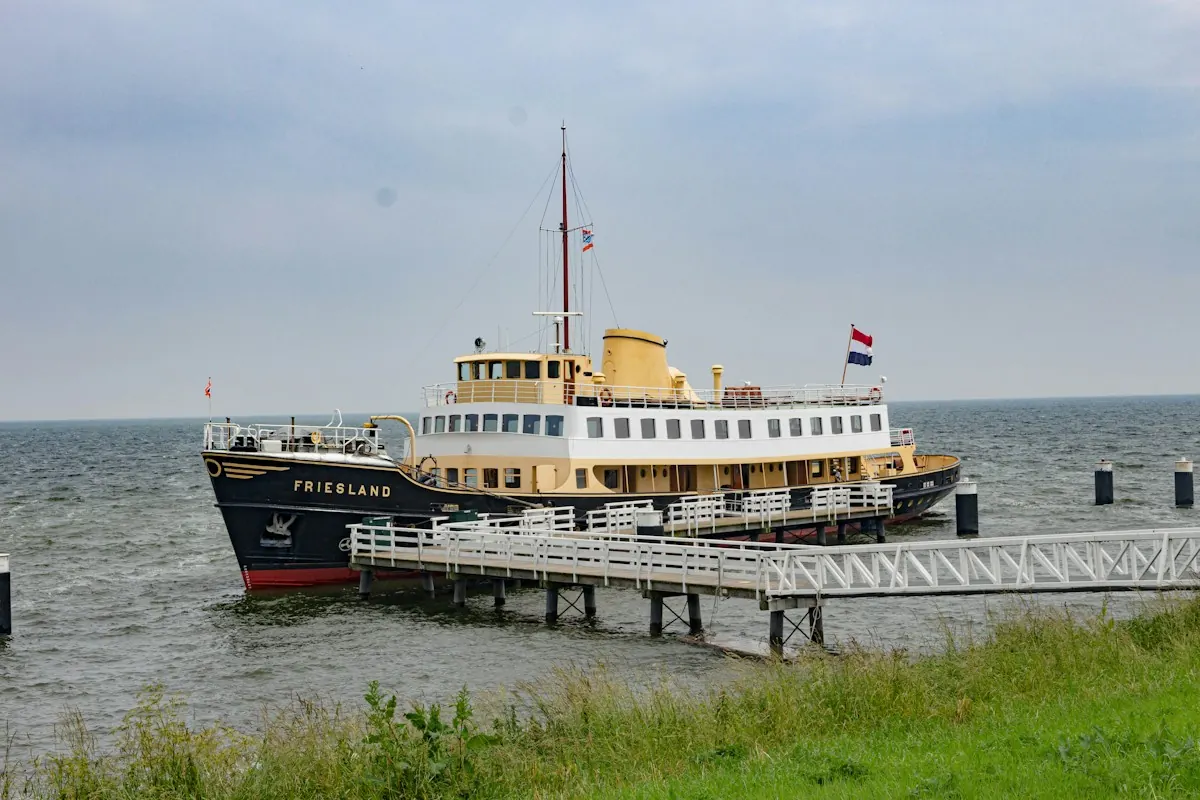
03 Noon
We went straight to the quay and aboard the Rangoon, and she sailed at noon exactly. Mrs Aouda had a cabin to herself. Passepartout had his shoes, new ones bought in Calcutta, and wore them with some ceremony. Mr Fix, I later found, was also aboard, having made his decision to follow us at about a quarter to twelve.
I took out my notebook that afternoon and worked the figures. We had reached Calcutta on the very day the Chronicle allowed for it. The two days won on the Mongolia had been spent: one on the forest, one on Mrs Aouda. I could not think of two better ways to spend them.
Balance: none in hand, none lost. Four thousand pounds out of the bag since Kholby, and an elephant given away.